LitNest
Role
Group Leader & UI/UX Designer
Context
Mobile App Design Module
Tools
Figma, Canva
Team
Collaborative Group
What is LitNest?
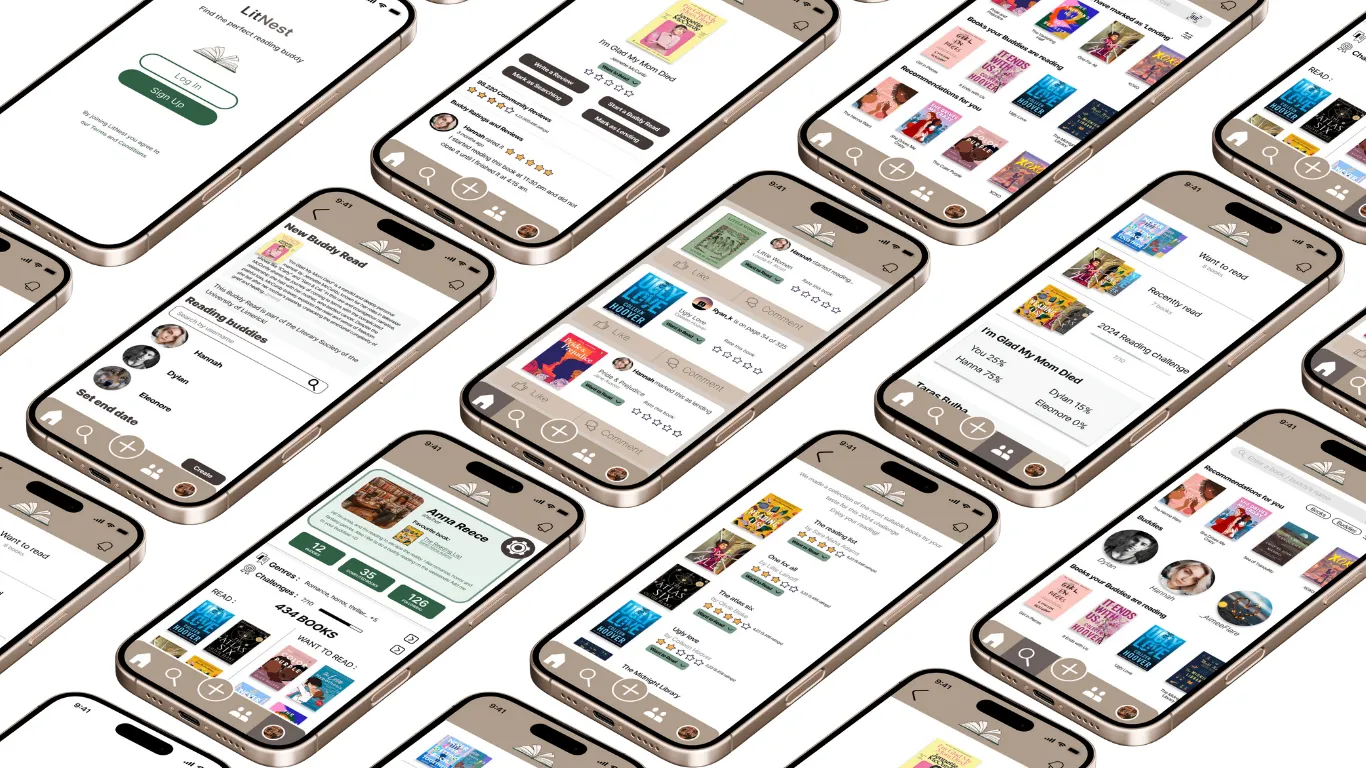
LitNest is a mobile book-tracking and social reading app, designed as a friendlier and more intuitive alternative to existing cataloguing tools like Goodreads and StoryGraph. LitNest combines "Literary" and "Nest," reflecting its function as a cosy, organised space for readers to collect their books. The app helps users track their reading activity, connect with friends through collaborative reads, and discover new titles through personalised recommendations.

Design Context and Problem
LitNest addresses critical usability challenges identified in popular reading applications. We recognised that StoryGraph's user interface was often plain and counterintuitive, making navigation difficult. A particularly significant problem within StoryGraph was the process of initiating Buddy Reads. The feature was hidden and adding users required exact usernames with no visual confirmation.
Additionally, Goodreads presented issues with inconsistent design elements and difficulties in locating certain features, such as adding friends. These pain points formed the foundation of our design brief, allowing us to design an application that simplifies the entire process, making collaborative reading accessible and engaging for all users.
Design and Development Process
This project began with a competitive analysis and a round of user interviews to understand how users currently track their reading and what frustrated them most about existing apps. From this, three core design priorities were identified:
Intuitive Navigation
Seamless Social Features
Visual Consistency
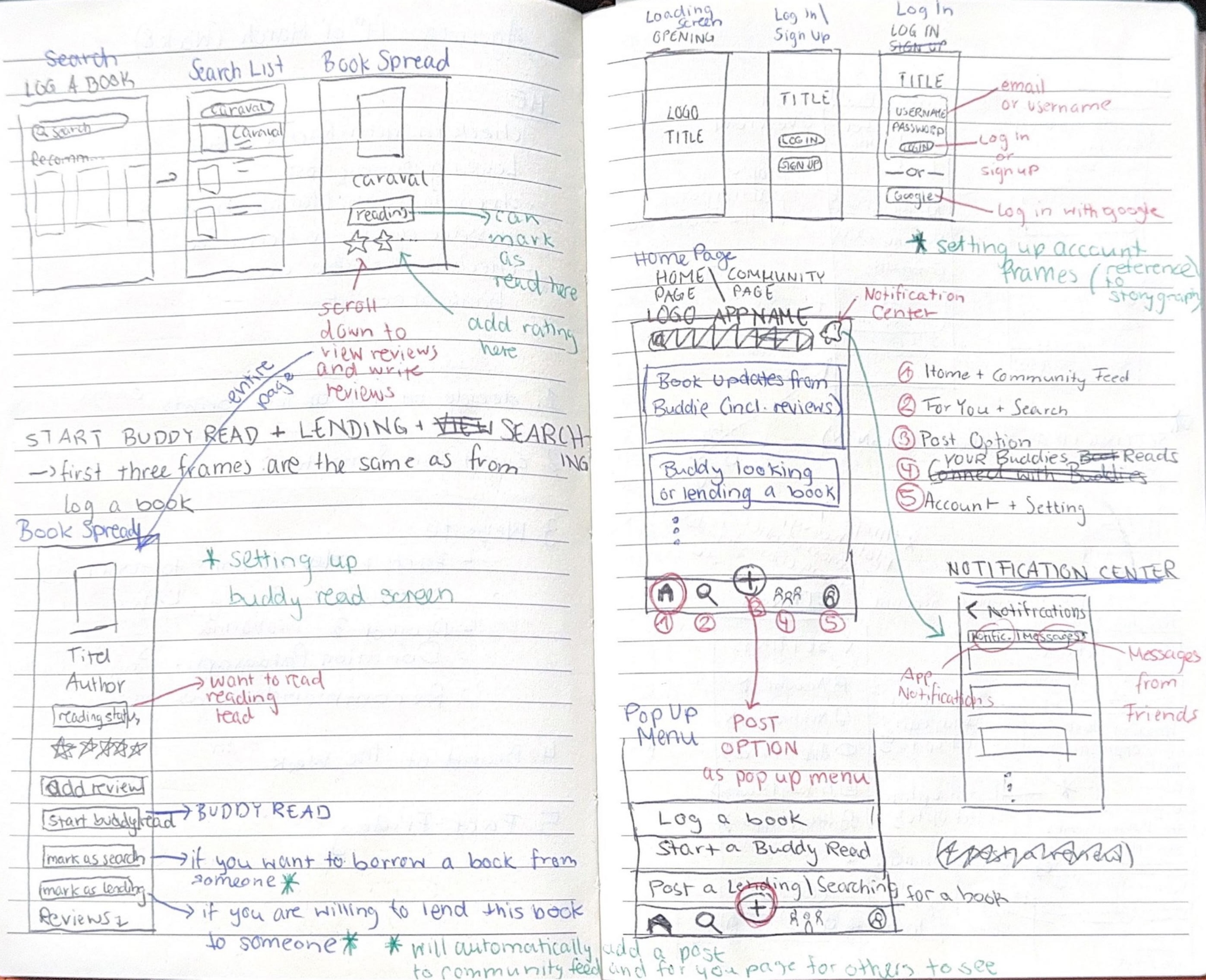
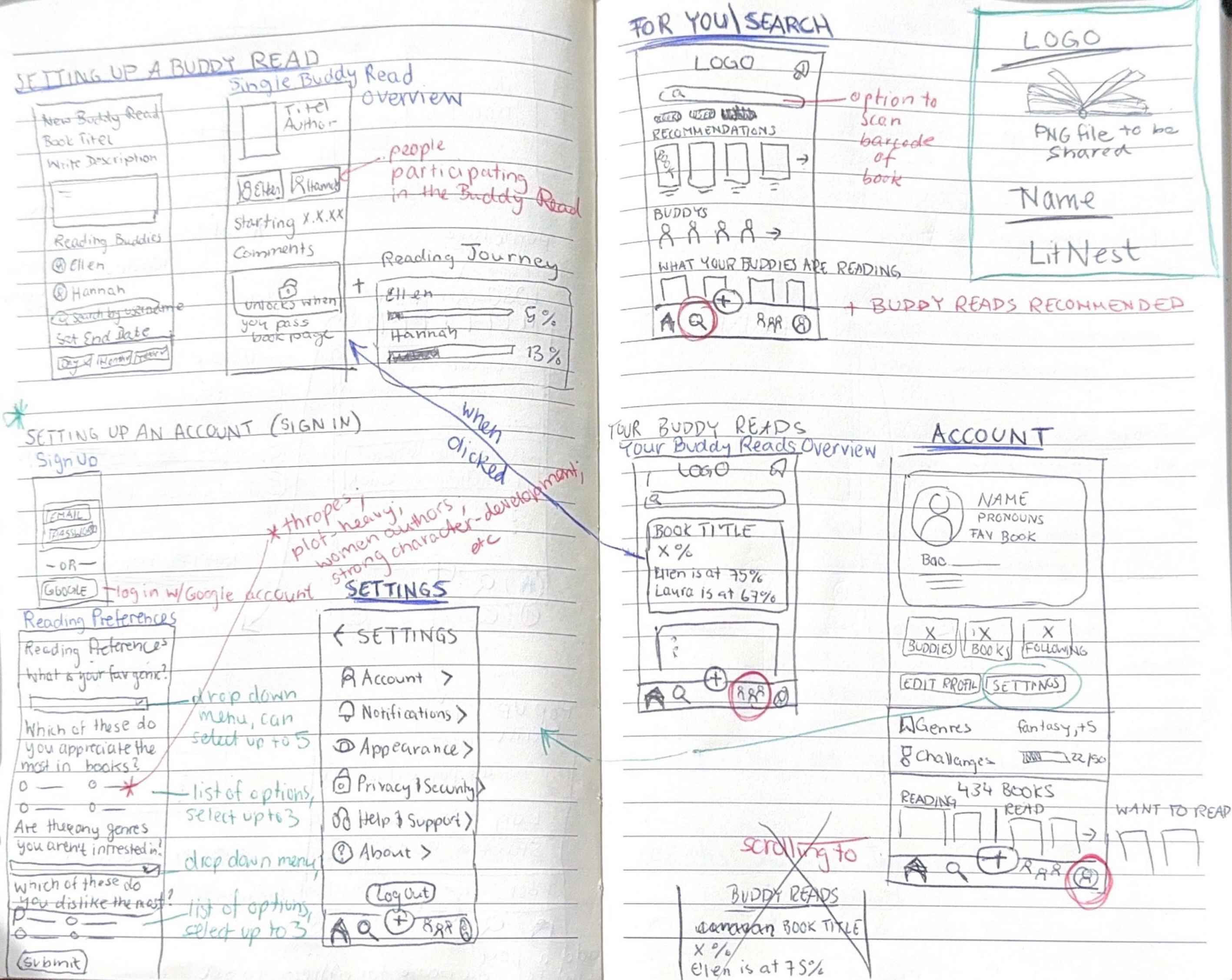
We created low-fidelity wireframes to map out key user journeys, then moved into Figma for mid-fidelity screens. After an internal review and a round of peer testing, we refined the designs into a polished high-fidelity prototype, iterating particularly on the Buddy Reads invite flow and the home feed layout.
Responsibilities
As part of a collaborative design team, I took on the role of group leader. My responsibilities spanned the entire design lifecycle, with a primary focus on user research, information architecture, and system-wide UI consistency. I conducted comprehensive competitive analyses of Goodreads and StoryGraph to identify critical usability gaps.
Next, I engineered a robust Figma component library, including rating systems, drop-down menus, and navigation bars, to maintain visual and functional consistency across all high-fidelity frames. Lastly, I authored the high-level navigation flow map, ensuring the architecture aligned with key usability heuristics.
Visual and Interaction Documentation
Key Features
LitNest provides users with several significant advantages. It enhances community and social interaction through seamless Buddy Reads, which include spoiler-preventing, page-specific comments. Users benefit from personalised book recommendations and efficient book tracking. A standout feature is the local book exchange option, which allows users to trade books within their local area.
Reflection
The LitNest project provided valuable insights into the complexities of collaborative design, particularly the necessity of aligning diverse perspectives on visual hierarchy and layout. A significant technical challenge involved the development of complex drop-down menu variants and optimising prototyping connections.
If revisiting the project, a structured usability testing phase with target users would be prioritised earlier in the process to validate navigation assumptions before reaching the high-fidelity stage.