From Artefact to Interaction
The Research Question
How can a 3D-printed Tangible Smart Replica of an Ancient Greek Statue be designed to improve visitor engagement while remaining sustainable and practical for long-term museum integration?
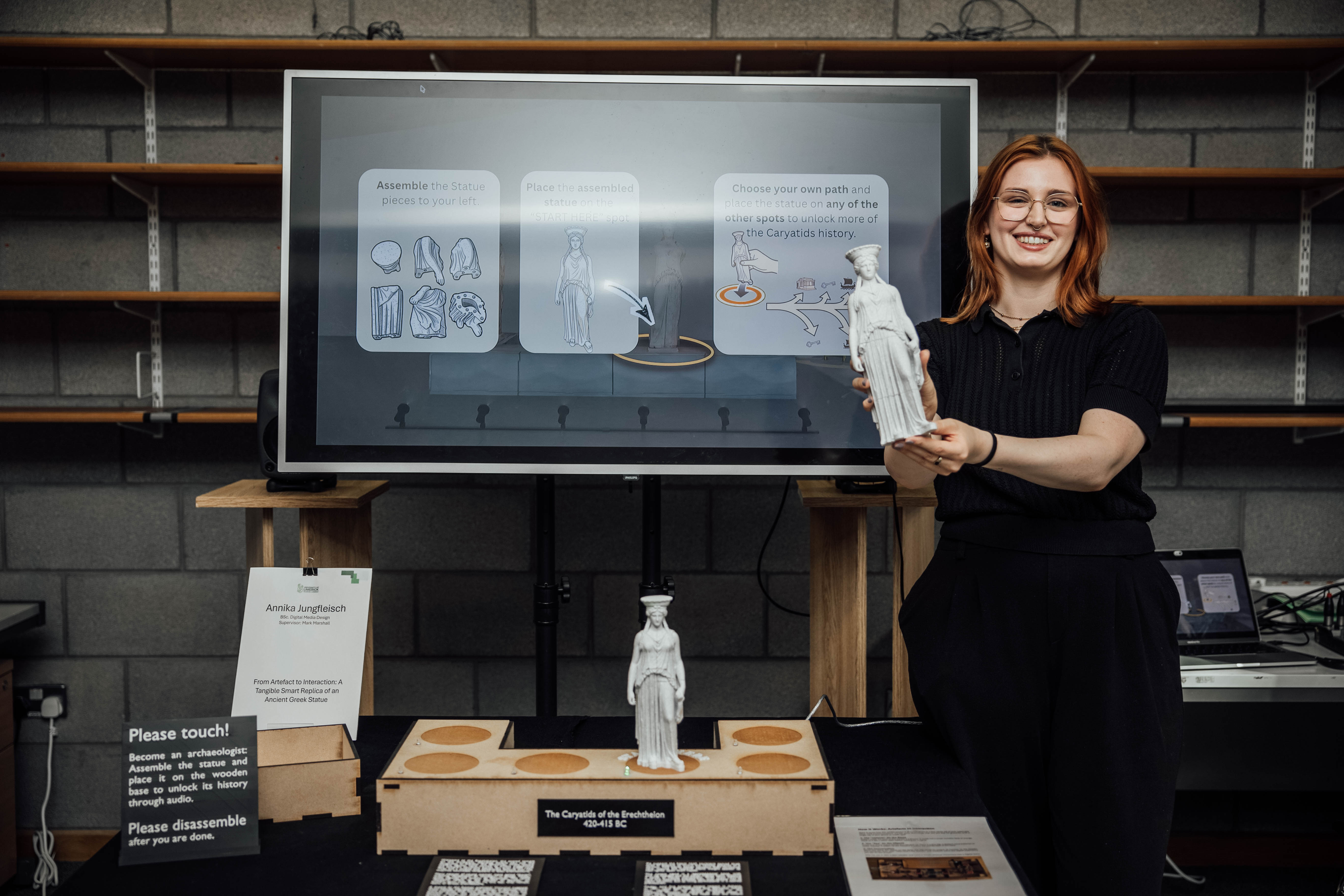
Traditional museums often operate under a "DO NOT TOUCH" policy, creating a sensory barrier between visitors and cultural heritage. My project, "From Artefact to Interaction", was developed as a Final Year Project to bridge this gap. By transforming a static replica of a Caryatid, an ancient Greek statue, into a Tangible Smart Replica (TSR) designed as a 3D puzzle, I aimed to explore how physical touch can deepen our understanding of history. The goal was to create an exhibit that invites curiosity, where the act of reconstruction leads directly to digital discovery.
The Concept: Embodied Cognition
This project is grounded in the theory of embodied cognition, a psychological principle suggesting that learning is not just a mental process, but one significantly enhanced through physical interaction. By requiring visitors to physically reconstruct the statue, the exhibit shifts the visitor's role from a passive observer to an active experimenter. This tactile approach ensures that the historical information provided at the end of the interaction is anchored to a physical memory.
Design & Fabrication: Merging Digital and Physical
The fabrication process was a multidisciplinary effort that combined digital precision with physical durability. To achieve a realistic look and feel, the 3D model of the Caryatid statue was meticulously divided into six puzzle segments. These parts were 3D printed using a marble-like PLA filament with a 40% infill, which provided the necessary weight and stone-like texture to make the replica feel authentic. A significant portion of the iterative prototyping involved calibrating the tactile "snap" of the puzzle pieces. Eventually, 4x2 mm magnets were integrated into custom-modelled internal cavities to ensure the assembled figure remained stable during the final interaction.
Parallel to the statue production, the interactive base was designed in Affinity Vector and constructed from laser-cut 6mm MDF. The finger-joint assembly method was utilised to ensure the electronics housing was structurally sound for high-traffic environments, such as museums, while remaining hollow to neatly organise the internal electronics.
Final Tangible Smart Replica
System Architecture: How It Works
The system is designed as a seamless feedback loop between a visitor’s physical actions and a digital narrative. It begins when a visitor encounters the disassembled statue and uses the figure's physical form as a natural guide for reconstruction. Once the user successfully completes the puzzle and places it on the MDF base, an NFC tag embedded in the statue’s feet is identified by a PN532 NFC reader hidden within the base. This detection triggers the Arduino Uno to send a signal to a local PC running Processing, which serves as the bridge to the digital rewards. The system then provides immediate sensory feedback through a localised audio narration that shares historical context about the Caryatids, paired with a visual animation on a nearby screen.
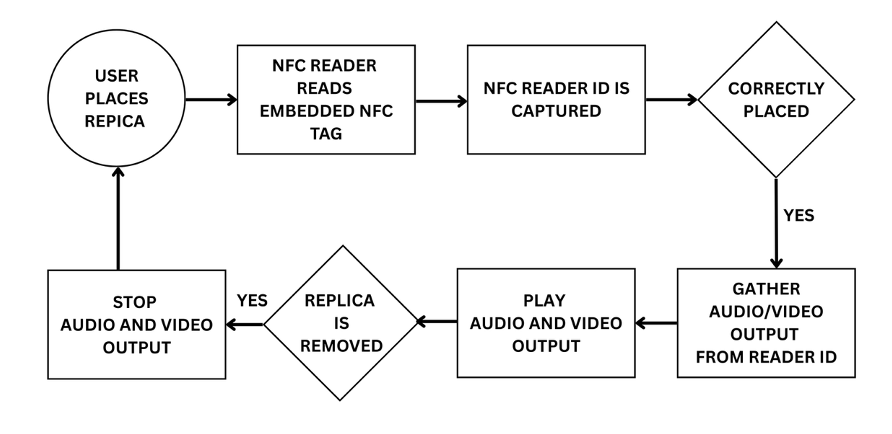
System Flow: From Physical Interaction to Digital Feedback
Technical Stack
The system bridges digital fabrication with physical computing to create a seamless "walk-up-and-use" experience.
| Component | Technology Used |
|---|---|
| Fabrication | FDM 3D Printing (Marble-like PLA) & Laser Cutting (6mm MDF) |
| Microcontroller | Arduino Uno (for reliable, real-time I/O control) |
| Sensing | Near Field Communication (NFC) via PN532 modules |
| Output | Processing-based visual animations and localised auditory narratives |
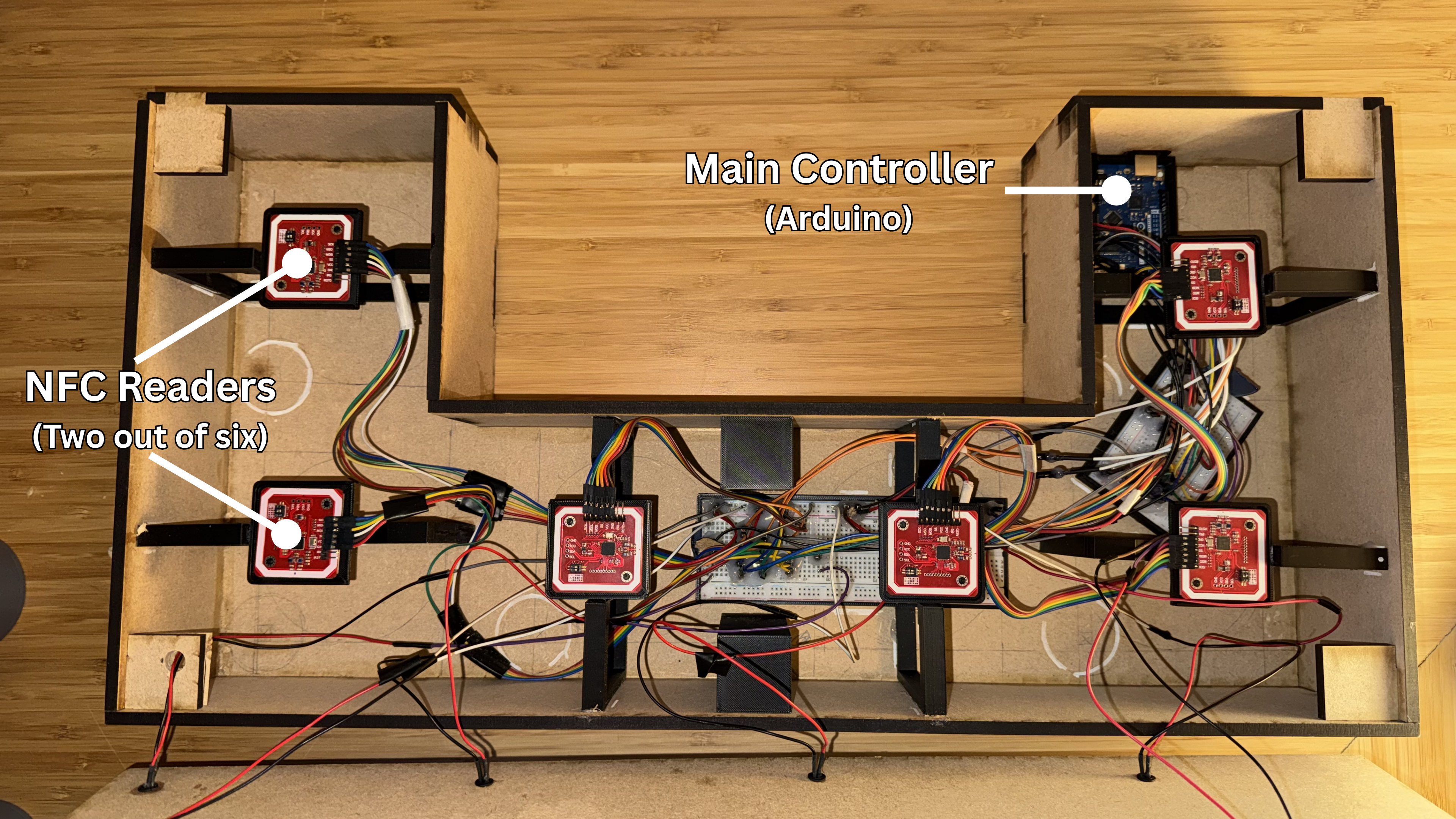
Technical Stack
Impact & Results
To validate the effectiveness of the TSR, 20 rounds of A/B testing was conducted, comparing the interactive puzzle against a traditional static display. The data gathered confirms that physical engagement is a powerful driver for both interest and education.
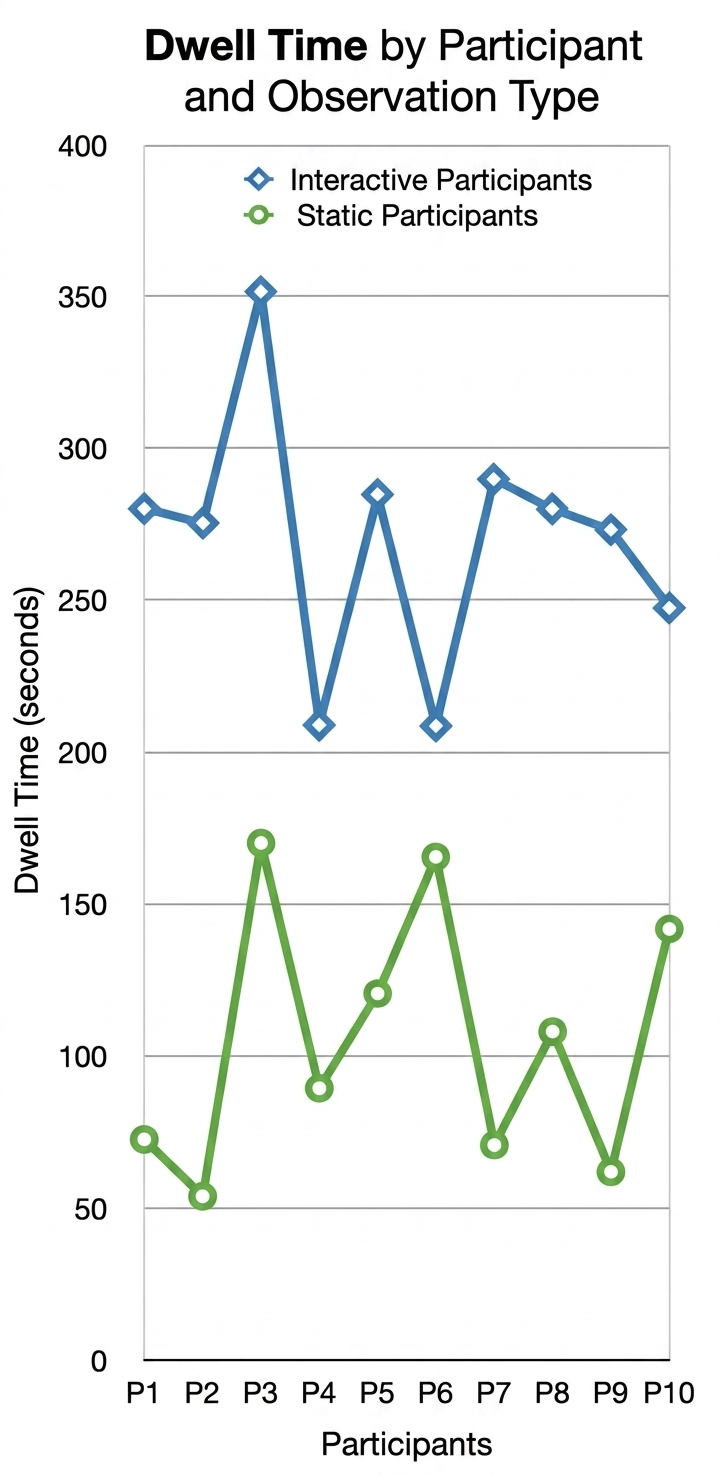
01. Dwell Time
Interaction duration increased by 156.3% compared to static observation.
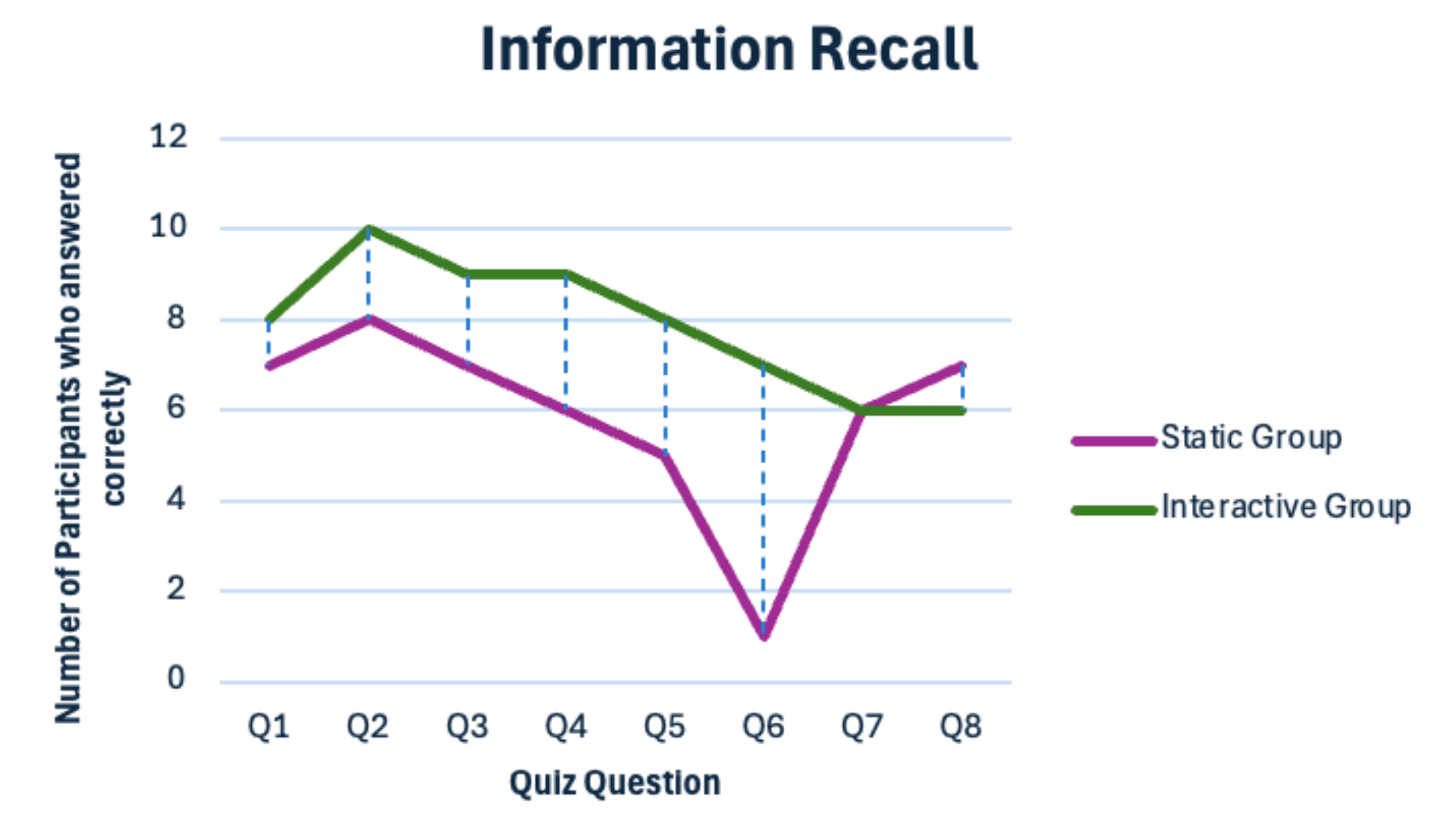
02. Information Retention
Participants scored 34% higher in recall tests after physical interaction.
03. Usability Rating
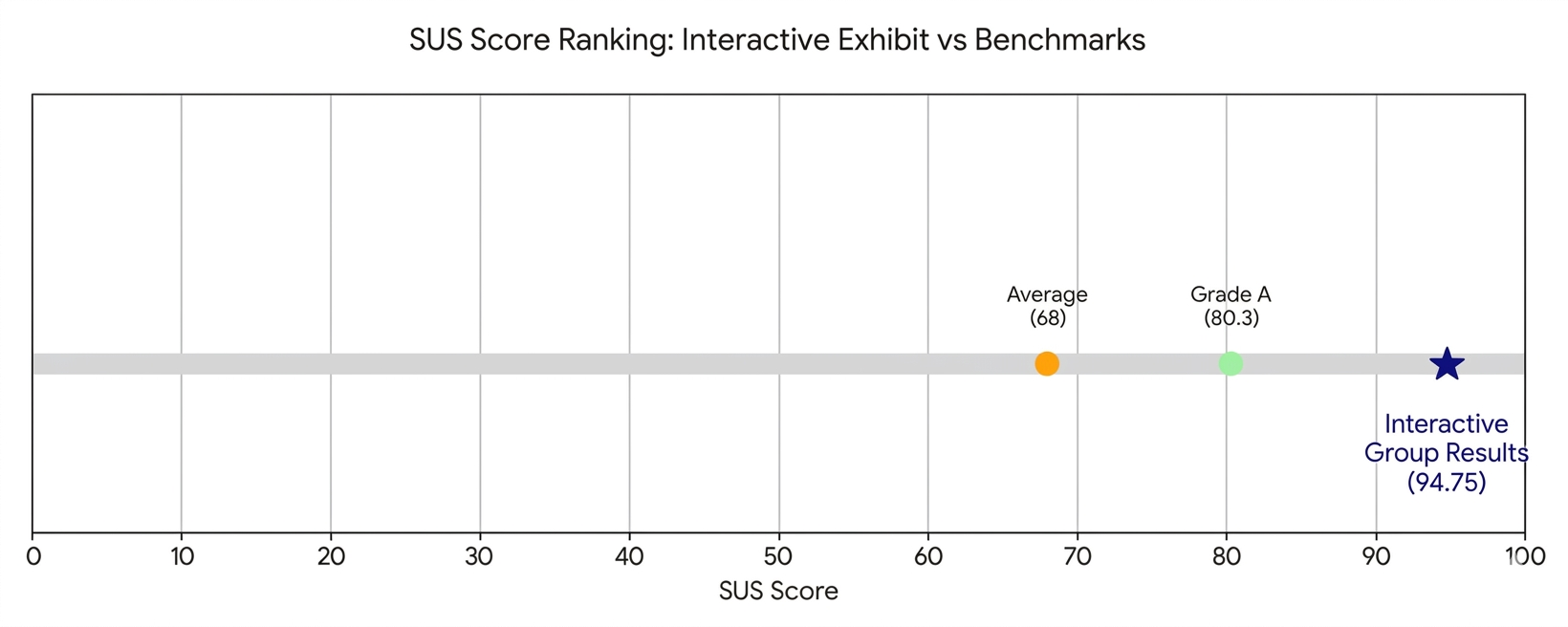
The system achieved a Grade A rating on the System Usability Scale (SUS).
04. Sustainability
The total unit cost remained under €200, ensuring the project is economically viable for real-world museum deployment.
| Category | Price |
|---|---|
| Hardware | €124.79 |
| Materials | €72.98 |
| Software | Free |
| Total | €197.77 |
Conclusion: What do the results mean?
The final results confirm that breaking the "Do Not Touch" barrier profoundly changes how visitors learn. The 156.3% increase in dwell time indicates that the challenge of the 3D puzzle creates a state of deep engagement, keeping visitors at the exhibit far longer than a standard observation-only display. More importantly, the 34% increase in information recall proves that "thinking with our hands" makes historical facts significantly more memorable. By maintaining a total unit cost under €200, this project demonstrates that museums can implement high-impact, smart exhibits using sustainable, accessible technology without requiring a massive budget.